
8.1K
Downloads
76
Episodes
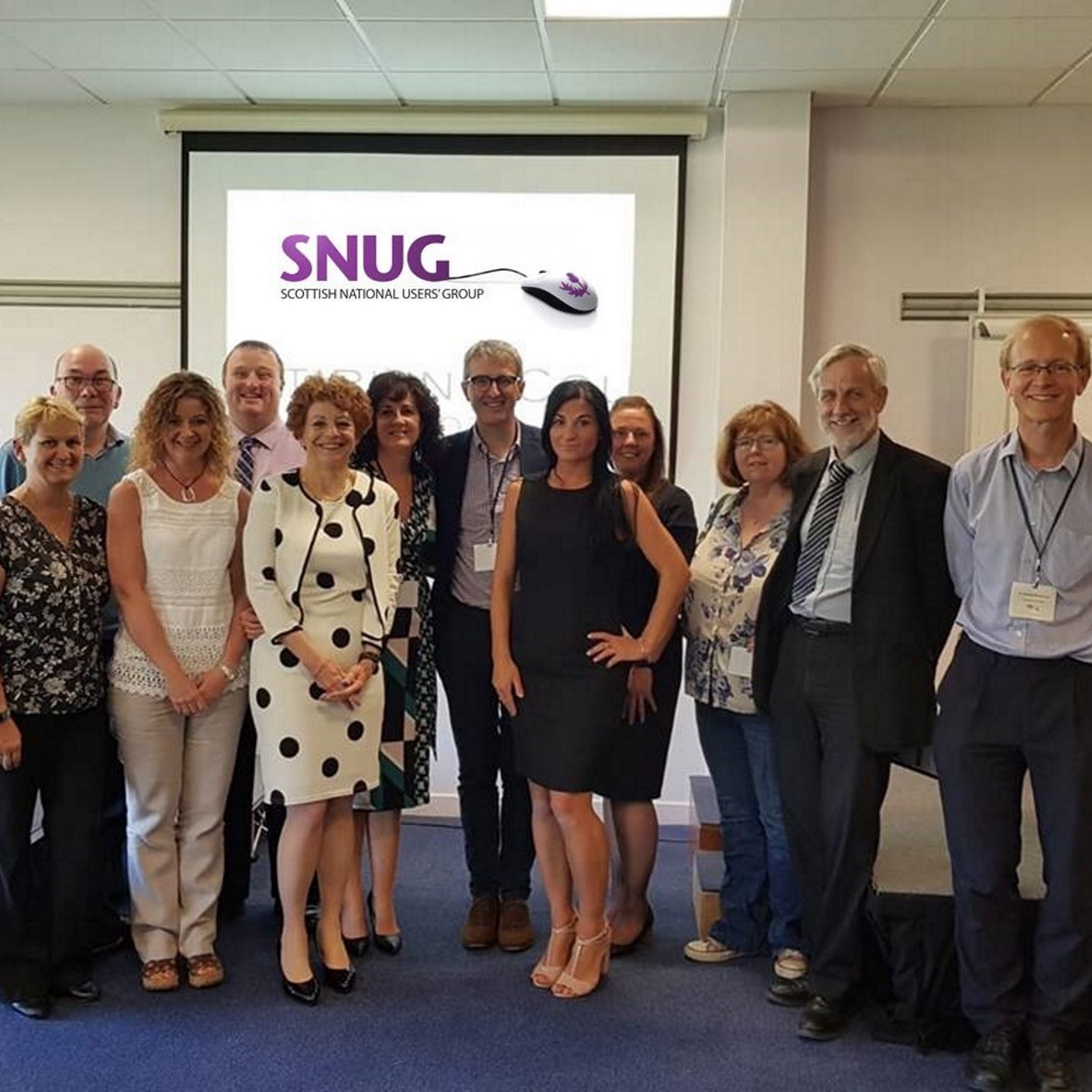
Supporting Scotland's Primary Care GP software users: welcome to the Scottish National Users Group (SNUG).
Supporting Scotland's GP Information Technology Community
The Scottish National Users' Group website is at https://www.snughealth.org.uk/
SNUG represents the voice of Scotland's Primary Care GP IT users on the national committees where decisions get made - including the Service Management Board, the Change Advisory Board, and the Joint GP IT Group. We share good practice, hints and tips and have have both regional and national meetings, online and face to face. Workshop videos and shared learning, as well as access to our meetings and conferences, are all available to members, this is available for only £100/year for practices. For more information, comments or queries, please contact our business manager Alex De Franco.
The SNUG podcast is free for everyone with a stake in the technology behind general practice - the users who work with it, the providers who build it, the people who plan it, and the patients it ultimately serves. We have conversations with the people behind the systems, the innovators, and users who experience the day-to-day realities of digital health. Have a watch below to see clips with some of our previous guests, and subscribe to follow along, either here on Podbean, Apple podcasts, Spotify or many other podcast providers.
Episodes

Sep 3, 2022
Sep 3, 2022
31 min
Docman is an electronic document management system and is used by general practices across Scotland. It was integral in the move to paper light practice and provides a workflow functionality, as well as rapid transfer of discharge and clinic letters and results from hospitals via the Docman hub and electronic document transfer (EDT). Using electronic document interchange between practices, the GP2GP process has been developed to transfer patient records rapidly when they change GP practices.
We hear from Sharon Wishart, who is the lead facilitator at the Primary Care Mentor team in Fife, and we discussed her experiences with Docman over the years, as well as dealing with a recent national problem with mysteriously disappearing documents. We also have highlights from a workshop on Docman 10 at the recent SNUG Members' Day given by Sean Foster, Philp Austin and Lesley Thorpe from the supplier company, OneAdvanced, when they outlined some of the benefits of Docman 10 over Docman 7. Docman 7 relies on local servers, but Docman 10 is run on a web browser as the data is stored in the cloud. Backups and updates will be handled in the data Centre, no down time is needed by practices and speed will be consistently better even at branch sites. Remote working will be easier, and also federated working.
SNUG members asked the team questions regarding coding of documents, system speed, SCI Gateway integration, timescale for rollout, direct printing to Docman, joint folders, updating the National folder structure, and emailing documents from Docman.
Docman - Electronic Document Management for healthcare video 2011
Aug 1, 2022
Aug 1, 2022
27 min
Scotland’s Digital health and care strategy was published in October 2021: https://www.gov.scot/publications/scotlands-digital-health-care-strategy/
What are we going to do with citizens data, with the management information that is collected, how do we address the challenges of devices and new sources of data that are coming in, how do we build trust?
In this episode, we hear highlights from a plenary from the May 2022 SNUG conference given by Jonathan Cameron, Director of Digital Health and Care at the Scottish Government.
There are three strategic aims:
- Citizens to have access to, and greater control over, their own health and care data
- Health and care services to be built on people-centred, safe, secure and ethical digital foundations
- Health and care planners, researchers and innovators to have secure access to the data they need.
Jonathan explained how these aims are being taken forward, with an emphasis on how they apply to Primary Care and general practice in Scotland.
Views are also sought on the new Data strategy which is out for public consultation until August 12th.
Data Strategy for health and social care
Contact via email: HSCDatastrategy@gov.scot
Jun 29, 2022
Jun 29, 2022
28 min
Professor George Crooks is the Chief Executive Officer of the Digital Health & Care Innovation Centre. He was a GP in Aberdeen for many years and understands the challenges facing Primary Care, as we move forward in a Digital age. At the recent SNUG Members’ day, he gave a plenary entitled: “Back to the Future! How can we use next generation digital solutions to deliver safe effective and sustainable services?” in which he posed the following questions:
- What does person centred data sharing look like?
- How good - and complete - is the data that we use to make decisions for our patients and their families?
- How much do we currently listen to our patients, and understand what their expectations are for the health care we provide?
“All we have to do is understand that our health and wellbeing is down to us as individuals, and we have to look at better ways of empowering individuals to take more responsibility, not simply for making better health and wellbeing choices, but also delivering more of their health care themselves...”
We have a condensed version of his talk on this episode – the full version with slides is available for SNUG members on our website – see link below.
Your comments and queries are welcome – you can email us at alex.defranco@phs.scot
Digital health & Care Innovation Centre
Professor George Crooks on Twitter
SNUG members Day 2022 programme and videos (for SNUG members)
May 22, 2022
May 22, 2022
25 min
Dr Jamie Hartmann-Boyce is associate professor at the Nuffield Department of Primary Care Health Sciences, and her team published a paper at the start of the Covid-19 pandemic predicting how care for patients with conditions like diabetes might worsen during national emergencies like the Covid pandemic.
She also had a paper in Diabetes care looking at the evidence that patients with diabetes were at increased risk of more severe Covid-19, and has also looked at whether Covid-19 infection may itself lead to a higher risk of developing diabetes.
There is now some evidence starting to emerge that a significant number of patients with diabetes may have been lost to follow up during the pandemic, and others may now have poorer control, although there is some variation within different subgroups. We discussed what this might mean for the care of patients with diabetes, and other long term conditions, and how we might now start to address this problem.
Listen to the end to hear whether e-cigarettes are a good thing, and what our favourite film trilogies are!
The Centre for Evidence-Based medicine
May 8, 2022
May 8, 2022
27 min
The Practitioner Services Division of National Services Scotland (NSS) supports GP practices across Scotland in a number of important ways. In this episode, we speak to their Business Change manager Annie McDonnell (annie.mcdonnell2@nhs.scot) who describes a project to digitize new patient records coming into practices who have already backscanned their old patient records. We discussed how may practices in Scotland are participating in the project, how quality assurance works, and when the paper records may be safely destroyed. We also reflect a little on what life was like as a GP with nothing but paper patient records, and discover a film depicting life as a Highland doctor in the 1940s.
PSD Area offices details are listed below:
- Grampian: Fiona.Teven@nhs.scot
- Lothian: psdmedicalmanagers@nhs.scot
- Glasgow: glasgow.registration@nhs.scot
- Argyll & Clyde:ac-registration@nhs.scot
- Ayrshire & Arran:aa-registration@nhs.scot
- Dumfries & Galloway:dg-registration@nhs.scot
- Lanarkshire:lanarkshire-registration@nhs.scot
- Western Isles:wi-registration@nhs.scot
Primary Care Informatics/SCIMP advice for practices on backscanning records
Mar 28, 2022
Mar 28, 2022
25 min
We have another episode looking at the care of patients with long term conditions, today we are joined by Dr Lorenz Kemper of Medlink Solutions. This is a system for carrying out online clinical reviews and can be used for reviews of conditions like asthma and diabetes, as well as a variety of other uses like medications reviews, submitting blood pressure readings, or reviews of patients on HRT or the contraceptive pill. Lorenz discusses how Medlink started up, how it provides practices with more options for reviewing patients and can prompt an overhaul for the entire approach to review of chronic conditions.
NHS England is supporting Primary Care to move towards a Digital First approach, where patients can easily access the advice, support and treatment they need using digital and online tools.
In Scotland, the Technology Enabled Care (TEC) programme is looking at a number of Remote Health pathways, including a national DACS solution.
Technology Enabled health Care GP DACS updates.
Barbara Fredrickson: Positive Emotions Transform Us
SNUG podcast on Apple podcasts
Mar 5, 2022
Mar 5, 2022
47 min
Scotland’s House of Care is based on the Year of Care Programme and as this BMJ article explains, is all about delivering person centred care in long term conditions.
In this episode of our podcast, we discuss how we can offer Care and Support Planning to patients with long term conditions, as we speak to Dr Graham Kramer @KramerGraham and Lindsay Oliver @lindsayeoliver, two of the leading figures in promoting this approach both in England and Scotland over the past few years. We also hear from Alison Fox, the Practice Manager of St Triduana’ s practice in Edinburgh, who have found that Care and support planning really works well for them, and how this has continued to be useful throughout the pandemic.
Angela Coulter video: evidence for care and support planning.
Cochrane Database review of evidence supporting Care and Support Planning.
You can contact SNUG by emailing alex.defranco@phs.scot
Jan 29, 2022
Jan 29, 2022
29 min
Dr Bill Martin is a former co-chair of SNUG and has recently moved on after a long spell in general practice, during which he experienced progressive computerization of all aspects of general practice. We discussed why he still thinks general practice is a great career choice, why he thinks many of the changes which have happened during the pandemic will stick, and why we will have to be careful about “opening up” surgeries again. He reflects on impending GP systems changes, having been through it all before, and recommends lots of planning as many systems are replaced over the next few years. He decides how he might spend a billion pounds on improving GP IT in Scotland, and we discussed whether general practice might benefit from having a spin doctor at the moment!
We also got on to debating whether he might want to consider running for prime minister and, of course, whether Scotland might beat Ireland at rugby?
Email Alex De Franco alex.defranco@phs.scot with any comments on this or other SNUG podcasts.
BBC News article on face to face GP consultations on Scotland.
Downing Street parties: How many wine bottles fit in a suitcase, and other questions
Dec 23, 2021
Dec 23, 2021
48 min
Dr Rob Hamilton is a GP in Snug Medical Centre in Snug, a small town on the South coast of Tasmania. We say hello to Rob and hear a little about what life there is like at the moment, as the border with new South Wales is about to open and they may start to experience Covid-19 for the first time. We also reflect on a hectic 2021 with SNUG co-chair Dr Neil Kelly who gives us some ideas for new year’s resolutions, including a digital detox, or at the very least, switching off notifications on your phone. And of course, we have some book reviews from Dr Chris Weatherburn, who describes SCIMP’s mutation into Primary Care Informatics and gives us plenty of enthusiastic tips on maintaining positivity as the new year beckons.
BMJ Talk Medicine Podcast: Wellbeing – feeling addicted to your phone?
Today FM Christmas Covid Handicap Hurdle
Chris Weatherburn’s book reviews
Positivity – Chris’s Barbara Fredrickson summary Youtube video
See and subscribe to Chris’s newsletters here!
Dec 16, 2021
Dec 16, 2021
45 min
Would you trust a machine to diagnose your skin cancer? Or, maybe, to reassure you that a mole is “ok”? We take a dive into the world of machine learning, which is a branch of artificial intelligence based on the idea that systems can learn from data, identify patterns and make decisions with minimal human intervention. The most promising advances in medical image analysis have used a type of algorithm known as a deep neural network. But what happens if the images aren’t of good enough quality?
We discuss both the great potential and also some of the current limitations of work in this area being done on both sides of the Atlantic, with Dr Colin Morton, who is a consultant dermatologist in NHS Forth Valley and is clinical operational lead for a skin cancer AI consortium in Scotland, Professor Mark Davis and Dr Dennis Murphree, the Director of Digital Health and Artificial Intelligence in Dermatology at the Mayo clinic, Rochester, Minnesota, USA.
Artificial Intelligence to help diagnose skin cancers: NHS Tayside project
Embracing the transformative power of digital pathology: Mayo Clinic